What’s Really the Difference Between Snow Tires and All-Season Tires?
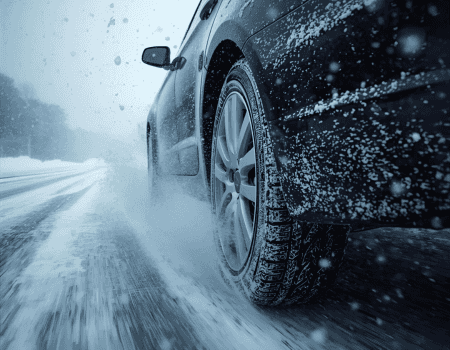 If you’ve ever stood in a tire shop staring at rows of tread patterns and buzzwords like “all-season,” “winter,” and “performance,” you’re not alone. Most drivers assume all-season tires are good enough for everything, right? After all, they’re called all-season. The truth is, all-season really means three-season. Once the temperatures drop below about 45°F, they start to lose their grip—literally.
Let’s break it down without the jargon or sales pitch.
Think of Tires Like Footwear
All-season tires are your everyday sneakers. They’re comfortable, versatile, and fine for most of the year. But when January rolls around in upstate New York, sneakers don’t cut it; you need boots.
Snow tires are those boots. They’re built from a softer rubber compound that stays flexible when it’s freezing, so the tire can mold to the road instead of stiffening up. That flexibility is what gives you traction when you hit that first slick patch on Genesee Street or the Parkway.
The Science Under the Tread
Here’s where things get interesting:
-
All-season tires are designed for durability, which means the rubber is harder. Great for summer highways, not so great for frozen pavement.
-
Snow tires use softer rubber mixed with silica to stay pliable in the cold. That lets them conform to uneven icy surfaces instead of sliding over them.
Even if both have the same tread depth, snow tires still outperform because their rubber moves with the surface.
The Tread Tells the Story
Snow tires have deeper grooves and tiny slits called sipes that act like hundreds of little claws, grabbing snow and channeling out slush. That’s why when you hit your brakes on icy pavement, they bite instead of slide.
All-season tires are smoother and quieter but designed for comfort and fuel economy, not winter warfare.
Stopping Distance: The Reality Check
Here’s what really separates them: on icy roads at 20 mph, cars with snow tires can stop 30 to 40 percent shorter than cars with all-seasons. That’s not a small margin; it’s the space between a “whoa” and a tow truck.
You’ll feel the difference in braking, cornering, and even acceleration.
Cost vs. Common Sense
Yes, swapping tires twice a year adds an extra errand. But since you’re alternating between two sets, each set lasts longer overall. Think of it as a long-term investment in safety and longevity, especially in a place where winter isn’t a season, it’s a lifestyle.
The Bottom Line for Utica Drivers
All-season tires are fine for mild winters. But real snow tires are designed for the kind of winter we get in Utica, the one with ice crust, plow piles, and snow days that last until April.
If you like starting your day with less wheel-spin and more control, you already know which choice makes sense.
Nimey’s New Generation Cars can help you check tread depth, find the right fit, and swap your set before the next cold snap.